News

How Do Stainless Steel Nuts Reduce Downtime in Industrial Assembly Lines?

2026-01-05 0 Leave me a message

In the relentless world of industrial manufacturing, downtime is the ultimate adversary. Every minute an assembly line is halted for maintenance, repair, or component failure translates directly into lost revenue, missed deadlines, and eroded profitability. For over two decades in the SEO and industrial space, we've observed a consistent trend: the foundational components often hold the key to systemic reliability. Among these, the humble fastener—specifically the stainless steel nut—plays a disproportionately critical role. At Ningbo Qihong Stainless Steel Co., Ltd., we have dedicated our expertise to engineering stainless steel nuts that are not just components, but proactive solutions for uninterrupted production. This article delves into the material science, precision engineering, and strategic advantages that make our stainless steel nuts a powerful tool for minimizing downtime and maximizing operational efficiency on your floor.


products


Table of Contents


What Makes Stainless Steel Nuts Unique for Industrial Durability?

The relentless pursuit of operational uptime in manufacturing begins at the most fundamental level: the integrity of material science. The core proposition of stainless steel, and by extension our specialized fasteners, lies in its engineered defiance against the environmental forces that degrade ordinary metals. Unlike plain carbon steel or plated variants whose protection is merely a superficial layer, stainless steel alloys achieve their resilience through a profound metallurgical characteristic. They contain a minimum critical mass of 10.5% chromium. This is not just an additive; it is the genesis of a transformative passive layer. 


When exposed to oxygen, this chromium reacts to form a microscopically thin, adherent, and most importantly, self-repairing oxide film on the surface. This invisible shield acts as a dynamic barrier, actively protecting the underlying iron matrix from the two primary agents of metallic decay: oxygen and moisture. In the chaotic ecosystem of an industrial floor—where humidity fluctuates, chemical vapors linger, pH-balanced washdowns are routine, and thermal cycles are constant—this inherent property is not just valuable; it is mission-critical. 


Our factory's foundational philosophy at Ningbo Qihong Stainless Steel Co., Ltd. is built upon sourcing and meticulously processing specific austenitic alloys, primarily AISI 304 and the superior AISI 316, precisely for this reason. The 316 grade incorporates an additional 2-3% molybdenum, an element that dramatically elevates resistance to pitting and crevice corrosion, particularly from chlorides, sulfuric compounds, and saline environments. This makes it the undisputed champion for food & beverage processing lines, chemical handling equipment, pharmaceutical cleanrooms, and coastal or marine applications. This fundamental material choice is the first and most decisive step in building a fastener system that doesn't just last but maintains its functional integrity. 


When a stainless steel nut does not rust or corrode, it eliminates a cascade of failure precursors: it does not galvanically weld itself to its mating bolt, it does not experience progressive thread degradation from oxide buildup, it does not suffer from hydrogen embrittlement common in plated steels, and it prevents particulate contamination that could ruin sensitive products or machinery. This translates directly into a quantifiable reduction in unplanned stoppages for emergency replacement, a drastic shortening of scheduled maintenance windows due to easy disassembly, and the cultivation of a cleaner, safer, and more predictable work environment. Our commitment, therefore, begins with this deep metallurgical understanding, ensuring every batch of stainless steel nuts we produce is not just a piece of metal, but a reliable, passive barrier against the environmental attacks that are the daily reality of industrial life.


Decoding the Alloy Matrix: A Detailed Look at Key Properties and Their Direct Impact on Downtime

To truly appreciate how our stainless steel nuts function as a frontline defense against downtime, one must examine the synergistic roles of their alloying elements. Each component is added with a specific performance outcome in mind, directly addressing a potential failure mode.

  • Chromium Content (17-20% in our standard 304/316 alloys): This is the cornerstone of corrosion resistance. The chromium oxide layer (Cr2O3) is impervious to water and air, preventing the fundamental chemical reaction of rust (Fe2O3). In our factory, we maintain tight control over chromium levels to ensure this passive layer forms instantly and consistently. Higher chromium content, as found in some of our specialty grades, further enhances resistance to oxidizing acids and high-temperature scaling. The direct impact? It eliminates the most common cause of fastener seizure, the root of countless hours of destructive removal efforts.
  • Nickel Content (8-12% in Austenitic Grades): Nickel is the stabilizer of the austenitic crystalline structure. This structure is non-magnetic, exceptionally tough, and ductile. The high ductility means our nuts can withstand significant deformation, impact loading, and thermal expansion/contraction cycles without cracking or becoming brittle. In applications where machinery experiences shock loads or rapid temperature changes, this toughness prevents catastrophic brittle fracture—a sudden failure mode that leads to immediate and prolonged line stoppages.
  • Molybdenum (2-3% in AISI 316): This is the premium upgrade for harsh service. Molybdenum ions integrate into the passive layer, making it significantly more stable and resistant to breakdown by chlorides—the arch-nemesis of stainless steel. It specifically prevents pitting corrosion, which are small, deep holes that can quickly penetrate a component and cause leaks or structural failure. For a nut in a chemical plant or a bottling line using chlorinated cleaners, specifying our 316 stainless steel nuts is the difference between a reliable connection and a frequent point of failure.
  • Carbon Content (Controlled to Low Levels, e.g., 304L, 316L): We prioritize low-carbon "L" grades for most of our inventory. Why? During welding or exposure to high temperatures in service, carbon can diffuse to the grain boundaries and react with chromium, forming chromium carbides. This "sensitization" depletes chromium locally, destroying the passive layer and creating a path for intergranular corrosion. By using low-carbon variants, we ensure the corrosion resistance is maintained even in heat-affected zones, preserving the nut's integrity in welded assemblies or high-temperature environments.
  • Silicon, Manganese, and Nitrogen: These elements play supporting but vital roles. Silicon improves resistance to scaling at high temperatures. Manganese aids in hot workability during our forging process and enhances strength. Nitrogen is a potent austenite stabilizer and strengthener, often used in our higher-grade offerings to boost yield strength without sacrificing corrosion resistance, allowing for the design of smaller or stronger fasteners.


Beyond Rust Prevention: The Multi-Faceted Durability Benefits

While corrosion resistance is the headline feature, the durability of our stainless steel nuts from Ningbo Qihong Stainless Steel Co., Ltd. extends into other critical areas that directly influence maintenance schedules and total cost of ownership.

  • Thermal Stability: Austenitic stainless steels retain their strength and oxidation resistance at both high and cryogenic temperatures. A nut that performs reliably on a hot engine casing or a frozen food processing line doesn't need to be swapped out for different seasonal or process conditions, simplifying inventory and preventing application errors.
  • Hygienic Properties: The non-porous, smooth surface of our nuts, especially when electropolished, prevents the adhesion of bacteria, mold, and contaminants. In industries like pharmaceuticals and food processing, this is not just about equipment life—it's about product safety and avoiding costly sanitation-related shutdowns or recalls.
  • Aesthetic and Structural Integrity Maintenance: Unlike plated nuts whose coating can chip or blister, the protective layer of stainless steel is integral to the material. This means the nut maintains its appearance and, more importantly, its dimensional stability over time. There is no flaking coating to jam precision machinery or contaminate a product batch.
  • Consistent Mechanical Properties: The homogeneous structure of our alloys ensures that the mechanical properties—tensile strength, hardness, proof load—are uniform throughout the nut. This predictability is crucial for engineers calculating clamping forces and for maintenance teams applying consistent torque, eliminating the risk of under- or over-torquing due to material inconsistencies.


In essence, the uniqueness of stainless steel nuts for industrial durability is a holistic proposition. It is the sum of passive corrosion resistance, active toughness, thermal resilience, and hygienic cleanliness. By investing in this material science from the outset, with a trusted partner like our factory, you are not just buying a fastener; you are procuring an insurance policy against a wide spectrum of failure vectors. This foundational understanding sets the stage for examining what happens when this science is absent—the costly failures we aim to prevent.


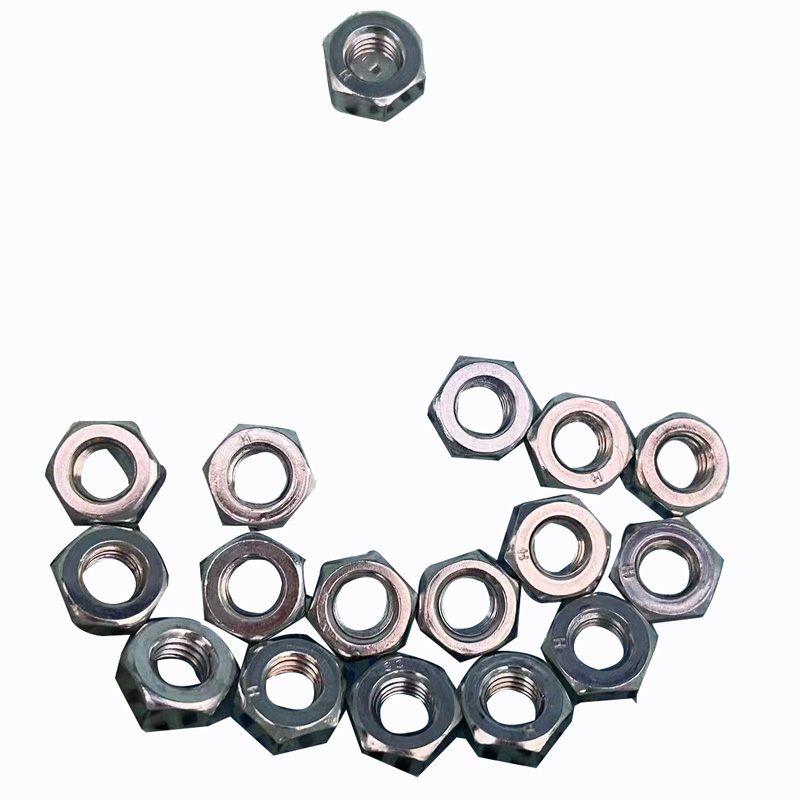
stainless steel bolts and nuts


How Do Conventional Nuts Fail and Cause Costly Downtime?

To appreciate the solution, one must understand the problem in detail. Downtime triggered by fastener failure is rarely instantaneous; it's a slow, predictable process of degradation that culminates in a critical point of failure. Conventional nuts, typically made from low-grade steel with a zinc or cadmium plating, are vulnerable to a host of issues. Galvanic corrosion occurs when dissimilar metals (e.g., a steel nut on an aluminum housing) are in electrical contact within an electrolyte like water. This accelerates corrosion of the anodic metal, often leading to seizure or thread stripping. Vibration-induced loosening, or fretting, is another major culprit. On a vibrating conveyor or press, a nut that isn't properly secured can gradually rotate loose, leading to part misalignment, excessive wear, and catastrophic assembly failure. 


Furthermore, the plating on standard nuts is merely a sacrificial coating. Once it is scratched, worn, or chemically compromised, the base steel is exposed and rusts rapidly. This rust acts as an adhesive, permanently welding the nut to the bolt. Disassembly then becomes a hours-long battle involving cutting tools, heat, and excessive force, often damaging expensive surrounding components. The cost here isn't just the $0.10 nut; it's the 3 hours of skilled labor, the lost production capacity, and the potential for secondary damage. In our experience auditing assembly line stoppages, we've traced cascading failures back to a single corroded or loose stainless steel nut. This reality is why our design philosophy prioritizes not just the material, but the entire integrity of the fastener system to prevent these failure modes at their root.


Common Failure Modes and Their Consequences

Failure Mode Primary Cause Typical Downtime Impact
Corrosion Seizure Exposure to moisture/chemicals, lack of corrosion resistance 2-4 hours for cutting and extraction, risk of part damage
Vibrational Loosening Insufficient clamping force, lack of locking features Unplanned stops for re-torquing; potential for major mechanical failure
Thread Galling Friction welding of similar metals during installation Component scrapping, complete thread replacement needed
Hydrogen Embrittlement Plating processes on low-grade steel Delayed, sudden brittle fracture under load
Shear Failure Insufficient grade or alloy strength for the application load Immediate assembly collapse, significant repair time

How Are Our Stainless Steel Nuts Engineered to Withstand Extreme Conditions?

Our approach at Ningbo Qihong Stainless Steel Co., Ltd. is to engineer resilience into every facet of the manufacturing process. It starts with certified raw material from reputable mills, but the true differentiation lies in our precision manufacturing and specialized treatments. For instance, thread galling—a common issue with stainless fasteners—is mitigated through controlled thread tolerances and surface treatments. We can apply a specialized lubricant or a thin polymeric coating during manufacturing that drastically reduces the coefficient of friction during installation, allowing for proper clamping force without the risk of cold welding. For applications subject to extreme vibration, we don't just supply a standard nut; we engineer solutions like prevailing torque locknuts with integrated nylon rings or metal-alloy inserts that create a persistent locking force, or flange nuts with a wide bearing surface to distribute load and resist rotation. 


Our factory is equipped with multi-station cold forming and thread rolling equipment. Thread rolling, as opposed to cutting, work-hardens the thread grain structure, enhancing tensile strength and fatigue resistance by up to 30%. This means our stainless steel nuts can endure more cyclic loading—common in automated machinery—before succumbing to fatigue cracks. Furthermore, we implement rigorous quality control, including salt spray testing per ASTM B117 to verify corrosion resistance and mechanical testing to ensure consistent hardness and proof load ratings. Every batch of our stainless steel nuts is traceable and guaranteed to meet the specified international standards, providing the reliability that plant managers and maintenance engineers can build their schedules around.


Engineering and Quality Control Processes

  • Precision Cold Forming: Creates a stronger grain flow compared to machining, resulting in higher structural integrity and fatigue life for our stainless steel nuts.
  • Thread Rolling: A critical process that compresses and shapes the material rather than cutting it away. This increases thread strength, surface finish, and resistance to stripping.
  • Heat Treatment (For Certain Grades): Processes like strain hardening for 300-series alloys are controlled to achieve optimal strength-to-ductility ratios.
  • Surface Enhancements: Options include electropolishing for ultra-clean, passivated surfaces or specialty lubricants for galling prevention.
  • Statistical Process Control (SPC): Real-time monitoring of dimensions, ensuring every nut meets the tight tolerances required for consistent performance.

What Critical Parameters Should You Consider When Choosing a Nut?

Selecting the right stainless steel nut is a systems engineering decision. It requires matching the fastener's properties to the specific demands of the application. A misstep in any single parameter can become the weak link that leads to failure. The first consideration is always the material grade. While 304 is excellent for general use, environments with chlorides demand 316. For high-temperature applications, the stability of the alloy is key. Next, the strength grade, defined by property class (e.g., A2-70 for stainless), must be specified to ensure the nut can handle the required clamping force without deforming. Size and thread fit are fundamental; an improper fit leads to inadequate preload and accelerated wear. Beyond these basics, specialized features must be considered. 


Does the application require a locking mechanism? We offer a range from nylon insert locknuts to all-metal prevailing torque styles. Is there a need for a wider load distribution or protection of the surface from screw rotation? A flange nut or a washer-integrated design from our catalog may be the answer. Corrosion resistance needs are quantified through salt spray test hours; our standard offerings provide a minimum of 96 hours for 304 and 168 hours for 316 without white rust, but we can supply nuts with coatings that exceed 1000 hours. By providing this detailed parameter matrix, we empower our clients at Ningbo Qihong Stainless Steel Co., Ltd. to make informed, specification-driven choices that eliminate guesswork and its associated downtime risks.


Parameter Explanation & Standard Our Typical Specification
Material Grade AISI/SAE standard (e.g., 304, 316). Defines base alloy composition. 304 (UNS S30400), 316 (UNS S31600), 316L (Low Carbon)
Property Class Mechanical strength rating per ISO 3506 or ASTM. Class 70 (A2-70): Tensile Strength 700 MPa min
Thread Specification Thread series, pitch, and tolerance (e.g., M10-1.5 6H). Metric Coarse (M), Metric Fine (MF), UNC, UNF per ISO and ASME.
Corrosion Resistance Salt Spray (Fog) Testing per ASTM B117. 304: >96 hrs to first red rust; 316: >168 hrs to first red rust.
Locking Feature Type of prevailing torque or free-spinning design. Nylon Insert (Elastic Stop), All-Metal Deformed Thread, Flanged Serrated.
Finish/Coating Surface treatment for friction or additional protection. Plain (Self-passivated), Electropolished, Wax/Grease Coated.

Implementing a Proactive Fastener Strategy: A Step-by-Step Guide

Transitioning to a downtime-minimizing fastener system is a strategic project, not just a procurement change. Based on our decades of collaboration with industrial clients, we recommend a systematic, four-phase approach. Phase 1 is the Audit and Analysis of current failure points. This involves reviewing maintenance logs to identify recurring fastener-related issues, taking samples of failed nuts for metallurgical analysis, and assessing the environmental conditions (chemical, thermal, vibrational) of each application point. Phase 2 is Specification and Sourcing. Using the data from Phase 1, you can now specify the exact grade, property class, locking feature, and finish required for each distinct application on your line. This is where partnering with a technical manufacturer like Ningbo Qihong Stainless Steel Co., Ltd. proves invaluable. Our engineers can review your specifications and suggest optimizations, often identifying opportunities to consolidate part numbers or upgrade critical points proactively. Phase 3 is Controlled Installation and Training. 


The best stainless steel nut can fail if installed incorrectly. We advocate for, and can provide guidance on, proper torque procedures, the use of calibrated tools, and the application of appropriate thread lubricants to achieve correct preload without galling. Phase 4 is Monitoring and Continuous Improvement. Establish a schedule to spot-check critical fasteners during routine maintenance. Track the performance data. This closed-loop process allows you to validate the effectiveness of your new stainless steel nuts and make further refinements. By adopting this strategy, you move from a reactive posture of fixing failures to a predictive model of preventing them, with our products and our factory's support as a cornerstone of your operational reliability.

Actionable Steps for Implementation

  • Conduct a Line Audit: Document every fastener application, its environment, and its failure history. Categorize them by criticality.
  • Define Specifications: For each category, define the required material, strength, locking feature, and corrosion resistance. Reference our parameter table.
  • Source from a Technical Partner: Engage with a manufacturer that provides full material certification and technical data sheets, not just a catalog.
  • Standardize and Inventory: Reduce part numbers where possible. Maintain a controlled inventory of high-grade stainless steel nuts to enable swift replacement.
  • Train Maintenance Teams: Ensure all personnel understand the importance of correct installation torque and handling of precision fasteners.
  • Establish a Torque Audit Procedure: Implement periodic checks of critical connections with calibrated torque wrenches to ensure preload is maintained.

Conclusion and Call to Action

In the high-stakes environment of industrial production, reliability is non-negotiable. As we've detailed, the choice of fastener is a critical, yet often underestimated, determinant of that reliability. Stainless steel nuts from a dedicated manufacturer like Ningbo Qihong Stainless Steel Co., Ltd. represent a strategic investment in preventing corrosion, resisting vibration, and enduring mechanical stress. By understanding failure modes, specifying precise parameters, and implementing a proactive fastener management strategy, you can transform a minor component into a major lever for reducing downtime and boosting your bottom line. The data, engineering, and proven performance are clear: upgrading to high-specification stainless steel nuts is a cost-effective operational upgrade.


Are you ready to tackle the root causes of fastener-related downtime on your assembly lines? Contact the experts at Ningbo Qihong Stainless Steel Co., Ltd. today. Our engineering team is ready to review your application challenges and provide a tailored specification for stainless steel nuts that will enhance the resilience and productivity of your operations. Request a sample kit or a consultation to see the difference precision-engineered fasteners can make.


Frequently Asked Questions (FAQs)

Q1: How do stainless steel nuts prevent corrosion-related downtime?

Stainless steel nuts prevent corrosion-related downtime through their alloy composition, primarily chromium (minimum 10.5%), which forms a passive, self-repairing oxide layer on the surface. This layer acts as an impermeable shield against oxygen and moisture, the main agents of rust. In industrial settings with humidity, chemical exposure, or washdowns, this means the nuts do not rust or seize onto bolts. Consequently, maintenance disassembly is quick and predictable, and there's no risk of sudden failure due to corrosion-induced weakening of the material. Our nuts at Ningbo Qihong, particularly in 316 grade with molybdenum, offer extended resistance even in chloride-rich environments, ensuring connections remain serviceable for years, thus eliminating frequent replacement stoppages.

Q2: What is thread galling and how do your nuts mitigate it?

Thread galling is a form of severe adhesive wear that occurs when two similar metals, like stainless steel threads on a nut and bolt, slide against each other under high pressure and friction. This can cause the threads to cold-weld together, seizing the assembly and often making disassembly impossible without destroying the components. We mitigate this in several ways. First, our manufacturing process ensures precise thread tolerances to reduce uneven stress points. Second, we can apply specialized anti-galling lubricants or coatings at our factory during production. These treatments significantly lower the coefficient of friction during installation, allowing for proper torque and clamping force to be achieved without the heat and material transfer that leads to galling, thereby preventing a major source of installation and removal-related downtime.

Q3: Can your stainless steel nuts withstand high-vibration environments?

Absolutely. Standard nuts can loosen under persistent vibration, but our stainless steel nuts are engineered specifically for such challenging conditions. We offer a range of locking fastener solutions. These include nylon insert locknuts, where a nylon ring creates strong friction against the bolt threads; all-metal prevailing torque locknuts with a deformed section that provides a consistent locking force; and flange nuts with serrated bearing surfaces that bite into the substrate to resist rotation. By specifying the correct locking feature from our product range for high-vibration points on your assembly line, you can virtually eliminate stoppages caused by nuts loosening, ensuring critical connections remain secure and intact.

Q4: What is the difference between 304 and 316 stainless steel for nuts, and which should I choose?

The primary difference lies in their chemical composition and resulting corrosion resistance. Both are austenitic and excellent general-purpose alloys. Type 304 contains chromium and nickel. Type 316 contains those plus 2-3% molybdenum. This molybdenum dramatically enhances resistance to pitting and crevice corrosion, particularly from chlorides, acids, and industrial solvents. Choose 304 stainless steel nuts for general indoor applications, dry environments, or where cost is a primary concern. Choose 316 stainless steel nuts for harsh environments: outdoor exposure, coastal areas, food processing (with sanitizers), chemical processing, pharmaceutical, and any application involving saltwater, chlorides, or acidic conditions. Selecting the correct grade prevents premature corrosion failure, making it a crucial decision for minimizing long-term downtime.

Q5: How do I determine the correct strength grade (property class) for my application?

Determining the correct property class requires understanding the tensile and yield strength needed for your joint. The property class (e.g., A2-70 for stainless steel) indicates the minimum tensile strength in MPa divided by 10 (70 = 700 MPa). You must calculate the required clamping force for your joint based on the operational loads (tension, shear, vibration) and safety factors. The nut must have a proof load capacity higher than this required preload. Using a nut with too low a class can lead to thread stripping or nut failure under load. Conversely, an excessively high class may be unnecessary and less cost-effective. Our technical team at Ningbo Qihong Stainless Steel Co., Ltd. can assist you with these calculations. Providing details about your bolt size, material, and operating loads allows us to recommend the optimal property class of stainless steel nuts to ensure a safe, reliable, and durable connection.

Related News
Leave me a message
X
We use cookies to offer you a better browsing experience, analyze site traffic and personalize content. By using this site, you agree to our use of cookies. Privacy Policy
Reject Accept