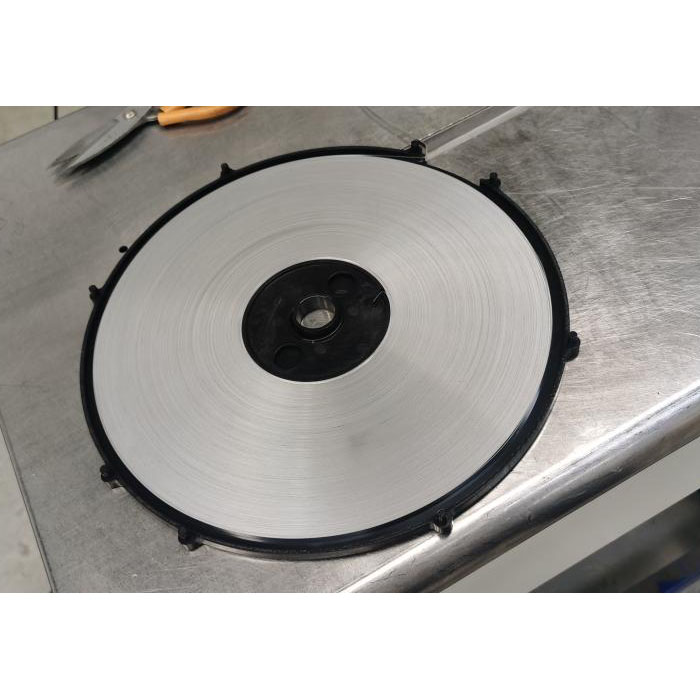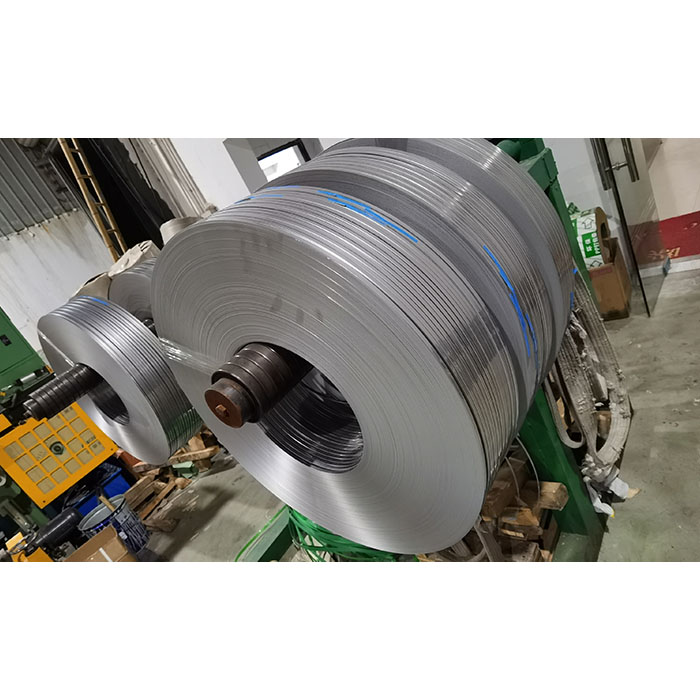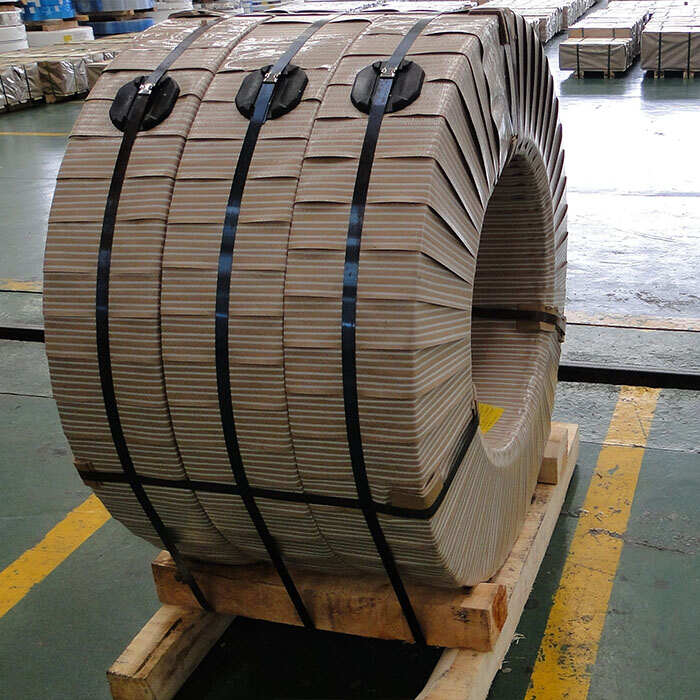

What Is the Difference Between 430 and 904L Stainless Steel Coils?
A practical comparison of alloy composition, corrosion resistance, magnetic behavior, forming performance, surface finishes, and industrial applications.
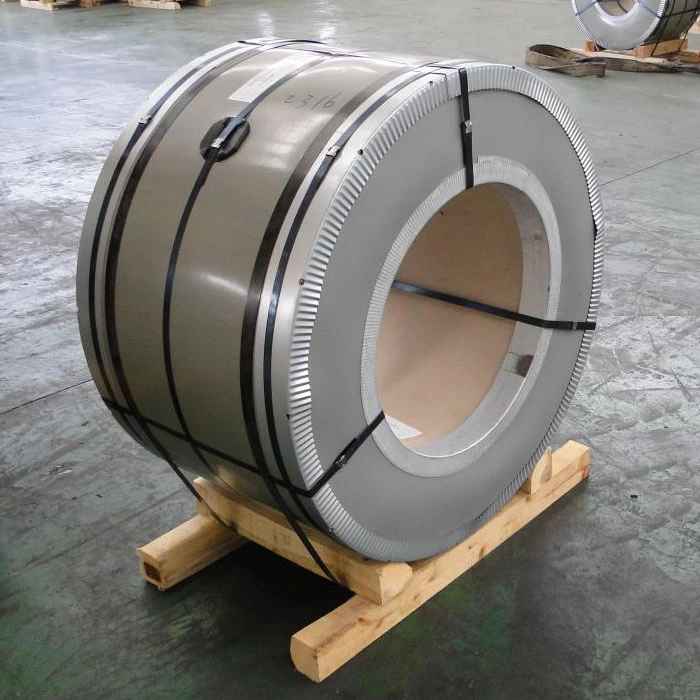
Grade 430 and grade 904L are both stainless steels, but they are designed for substantially different operating environments. Grade 430 is a ferritic stainless steel containing approximately 16–18% chromium and little or no intentionally added nickel. It is magnetic and commonly used for decorative, appliance, and general fabricated components.
Grade 904L is a low-carbon, high-alloy austenitic stainless steel containing substantial nickel, molybdenum, and copper. Its alloy composition provides stronger resistance to many aggressive chemical environments, particularly certain acidic and chloride-containing conditions.
At Ningbo Qihong Stainless Steel Co., Ltd., we work with precision stainless steel materials for applications where material grade, thickness, surface finish, and processing behavior matter. This article explains the differences between 430 and 904L and how those differences affect the performance of a Stainless Steel Coil in real manufacturing conditions.
1. What Are 430 and 904L Stainless Steels?
The first difference between 430 and 904L is their metallurgical structure. Although both belong to the stainless steel family, they contain different alloying elements and behave differently during fabrication and service.
1.1 Grade 430: Ferritic Stainless Steel
Grade 430 is a chromium-based ferritic stainless steel. It has a body-centered cubic crystal structure and is magnetic under normal conditions.
Its chromium content provides corrosion resistance suitable for many indoor and relatively mild environments. Grade 430 also offers useful forming properties and is widely associated with household appliances, decorative components, kitchen equipment, and general sheet-metal fabrication.
In our experience with precision stainless steel processing, the appeal of 430 is not simply its material composition. Its combination of surface appearance, magnetic behavior, and formability makes it useful in many standardized manufacturing operations.
1.2 Grade 904L: High-Alloy Austenitic Stainless Steel
Grade 904L, also designated UNS N08904, is a low-carbon, high-alloy austenitic stainless steel. It contains substantially more nickel than 430, together with molybdenum and copper.
These alloying elements improve resistance to several corrosive media, including certain sulfuric-acid environments and chloride-related localized corrosion.
Unlike 430, 904L is generally nonmagnetic in its solution-annealed condition. It is commonly associated with chemical processing, petrochemical equipment, acid-handling systems, and other applications involving demanding corrosion conditions.
2. How Do Their Chemical Compositions Differ?
| Element | 430 Stainless Steel | 904L Stainless Steel |
|---|---|---|
| Chromium (Cr) | 16.0–18.0% | 19.0–23.0% |
| Nickel (Ni) | Generally not intentionally added; residual limits apply | 23.0–28.0% |
| Molybdenum (Mo) | Not a specified principal alloying addition | 4.0–5.0% |
| Copper (Cu) | Not a specified principal alloying addition | 1.0–2.0% |
| Carbon (C) | Maximum 0.12% | Maximum 0.020% |
| Metallurgical family | Ferritic | Austenitic |
3. Which Grade Has Better Corrosion Resistance?
For many aggressive chemical environments, 904L provides considerably stronger corrosion resistance than 430. However, corrosion resistance should always be evaluated against the actual chemical medium, concentration, temperature, oxygen availability, and exposure duration.
3.1 Corrosion Behavior of Grade 430
Grade 430 performs reasonably well in many mild atmospheric and indoor environments. Its chromium content forms a protective passive surface film.
It also offers resistance to certain oxidizing environments, but its performance is more limited in chloride-rich or strongly corrosive chemical conditions.
For equipment exposed to moisture, cleaning chemicals, or outdoor conditions, the actual exposure should be reviewed rather than assuming that all stainless steels behave similarly.
3.2 Corrosion Behavior of Grade 904L
Grade 904L contains high levels of chromium, nickel, and molybdenum, with copper added to improve resistance in certain reducing-acid environments.
It generally provides much better resistance than 430 to pitting and crevice corrosion under many chloride-containing conditions. Its high nickel content also contributes to resistance against chloride stress-corrosion cracking.
This is why 904L is associated with sulfuric-acid handling equipment, chemical processing systems, and selected flue-gas treatment applications.
3.3 Corrosion Resistance Comparison
| Exposure condition | 430 | 904L |
|---|---|---|
| Dry indoor atmosphere | Generally suitable | Generally suitable |
| Mild atmospheric moisture | Suitable in many conditions | High corrosion resistance |
| Chloride-containing environments | Limited resistance | Substantially improved resistance |
| Certain sulfuric-acid environments | Generally unsuitable for demanding exposure | Designed for selected acid-service conditions |
| Pitting and crevice corrosion | More susceptible | More resistant under many conditions |
| Chloride stress-corrosion cracking | Ferritic structure provides relative resistance, subject to other failure modes | High-nickel composition provides improved resistance |
4. Magnetic and Mechanical Properties
Corrosion resistance is only one part of the material comparison. Magnetic behavior, strength, ductility, and thermal expansion can also influence manufacturing decisions.
4.1 Magnetic Properties
Grade 430 is magnetic because of its ferritic crystal structure. This characteristic can be useful where magnetic attraction or magnetic identification is relevant.
Grade 904L is generally nonmagnetic in the solution-annealed condition. Its magnetic response may vary with processing history and material condition.
4.2 Strength and Ductility
Both grades can be formed into sheet and coil products, but their mechanical behavior differs. The austenitic structure of 904L generally provides greater ductility and work-hardening capability than ferritic 430.
Grade 430 can perform well in suitable stamping and forming operations, although forming limits depend on thickness, grain structure, surface condition, and processing direction.
| Property | 430 | 904L |
|---|---|---|
| Magnetic behavior | Magnetic | Generally nonmagnetic when solution-annealed |
| Typical minimum tensile strength | Approximately 450 MPa | Approximately 490 MPa |
| Typical minimum yield strength | Approximately 205 MPa | Approximately 220 MPa |
| Ductility | Moderate to good | Generally higher |
| Work hardening | Relatively limited | More pronounced |
| Thermal expansion | Lower | Higher |
5. Forming, Welding, and Surface Finishes
When processing a Stainless Steel Coil, the material grade must be considered together with the required final geometry and surface. Two coils with the same nominal thickness may behave differently during stamping, bending, or welding.
5.1 Cold Forming and Stamping
Grade 430 is commonly used for formed sheet-metal components. It can provide useful deep-drawing performance when the material condition and forming process are appropriate.
However, ferritic stainless steels can show directional forming behavior. Surface ridging, bend cracking, and springback should be considered during tooling design.
Grade 904L generally has greater ductility, but it also work-hardens more strongly. This can increase forming forces and affect tool wear during repeated deformation.
5.2 Welding Behavior
Grade 430 can be welded, but its ferritic structure creates specific concerns related to grain growth and reduced toughness in the heat-affected zone.
Grade 904L generally offers good weldability with suitable welding procedures and compatible filler materials. Its low carbon content helps reduce the risk of sensitization during welding.
Weld design should still account for joint geometry, heat input, corrosion environment, and the applicable fabrication standard.
5.3 Surface Finish Options
Surface finish affects appearance, cleanability, friction, and subsequent processing. Both grades can be supplied in a range of finishes depending on production conditions.
| Finish | General appearance | Typical consideration |
|---|---|---|
| 2D | Matte, relatively low reflectivity | General industrial processing |
| 2B | Smooth, lightly reflective | Forming and fabricated components |
| BA | Bright annealed, highly reflective | Appearance-sensitive applications |
| No.4 | Directional brushed finish | Decorative and visible surfaces |
| Mirror finish | Highly polished surface | Reflective and decorative components |
A polished finish should not be confused with an improvement in the alloy's basic corrosion resistance. Surface roughness, contamination, passivation, and maintenance can influence real-world corrosion behavior.
6. Coil Dimensions and Technical Specifications
Dimensions are important when comparing stainless steel coil products for industrial processing. Thickness, width, flatness, edge condition, and surface finish affect the behavior of the material during downstream manufacturing.
Our published product specifications for 430 and 904L include the following dimensional ranges.
| Parameter | 430 | 904L |
|---|---|---|
| Material grade | 430 | 904L |
| Published thickness range | 0.02–4.0 mm | 0.02–4.0 mm |
| Published width range | 2–1500 mm | 2–1500 mm |
| Published length range | 200–3500 mm or customized | 200–3500 mm or customized |
| Surface finishes | No.1, No.4, 2D, 2B, BA, mirror | No.1, No.4, 2D, 2B, BA, mirror |
| Referenced standards | ASTM, JIS, GB, AISI, DIN, BS, EN | ASTM, JIS, GB, AISI, DIN, BS, EN |
These figures are published product-range information. They do not mean that every combination of grade, thickness, width, finish, and temper is available under identical production conditions.
Coil dimensions also need to be distinguished from cut-sheet dimensions. A continuous coil is usually specified by thickness, width, and coil weight or length, while cut sheets have individual piece lengths.
6.1 Why Thickness Tolerance Matters
In precision stamping, even small variations in strip thickness can influence forming force, dimensional consistency, and tool clearance.
For narrow components, thickness variation across the strip width can be particularly important. The required tolerance should therefore reflect the final component's dimensional and functional requirements.
6.2 Edge Condition and Surface Quality
Slit edges may require specific burr limits or edge profiles. Surface scratches, waviness, and flatness variations can also affect subsequent forming and finishing.
These processing details are relevant regardless of whether the selected material is 430 or 904L.
7. Typical Industrial Applications
The different alloy characteristics of 430 and 904L lead to different application patterns. A grade suitable for appliance panels is not necessarily appropriate for acid-processing equipment.
7.1 Common Applications of Grade 430
Grade 430 is widely used in applications where moderate corrosion resistance, formability, and surface appearance are important.
- Household appliance panels and components
- Kitchen equipment and decorative trim
- Indoor architectural elements
- Stamped and formed metal components
- Selected automotive trim and fabricated parts
For these applications, the operating environment is often less chemically aggressive than that encountered in chemical-processing equipment.
7.2 Common Applications of Grade 904L
Grade 904L is more closely associated with industrial equipment exposed to corrosive liquids, gases, and process conditions.
- Petrochemical processing equipment
- Selected chemical reactors and vessels
- Sulfuric-acid storage and handling systems
- Heat exchangers for compatible process media
- Flue-gas desulfurization components
- Scrubbers, ducts, and associated process equipment
Actual suitability depends on temperature, chemical concentration, fabrication details, and the required service life.
7.3 Application Comparison
| Application | 430 | 904L |
|---|---|---|
| Indoor appliance panels | Common choice | Usually unnecessary for corrosion requirements |
| Decorative metal components | Common choice | Possible but rarely necessary |
| Precision stamped parts | Suitable for many designs | Suitable where its properties are required |
| Acid-handling equipment | Generally limited | Suitable for selected chemical conditions |
| Petrochemical processing | Limited in aggressive environments | Commonly considered |
| Flue-gas desulfurization | Generally not preferred for aggressive wet service | Used in selected components |
8. How Should the Two Grades Be Evaluated?
The most useful way to compare 430 and 904L is to begin with the intended service conditions rather than focusing only on the grade designation.
8.1 Evaluate the Corrosion Environment
Identify the chemicals involved, their concentrations, the expected temperature range, and whether the equipment will experience stagnant or flowing conditions.
If chloride-containing liquids or aggressive acids are present, 904L may offer important advantages. For relatively mild indoor service, 430 may provide sufficient resistance.
8.2 Consider Forming and Fabrication
Bending radius, stamping depth, weld configuration, and surface finish requirements should be reviewed before finalizing a material.
A Stainless Steel Coil with the correct alloy composition can still produce inconsistent parts if its thickness, temper, or surface condition does not match the manufacturing process.
8.3 Assess Total Service Requirements
Material evaluation should consider not only initial material cost, but also fabrication difficulty, inspection requirements, corrosion allowance, maintenance, and expected operating life.
For applications with demanding chemical exposure, corrosion testing and material compatibility data are more reliable than general grade comparisons alone.
9. Precision Stainless Steel Processing at Qihong
Ningbo Qihong Stainless Steel Co., Ltd. is located in Ningbo, Zhejiang Province, China. Our activities cover precision stainless steel strips, stainless steel sheets, cold-rolled steel strips, and precision fastener processing.
Our main product categories include precision stainless steel materials, coils, stainless steel dowels, and stainless steel foil.
9.1 Precision Materials and Processing
We work with stainless steel materials used in household appliances, electronic components, medical instruments, computers, stamping parts, hose clamps, and automotive components.
Our product range includes multiple stainless steel grades, including 201, 301, 304, 304L, 310, 316, 321, 430, and 409, with finishes such as BA, 2B, 1D, 2D, and other processed surfaces.
9.2 Manufacturing Experience and Quality Control
We cooperate with established stainless steel production facilities that have more than 40 years of experience in high-precision stainless steel manufacturing.
Our operations emphasize material processing, inspection instruments, quality control, and dimensional consistency. These factors are particularly important for thin-gauge stainless steel used in precision manufacturing.
9.3 Understanding Different Alloy Requirements
Our published product range includes both 430 and 904L grades. Although they can be supplied in similar product forms, their metallurgical characteristics lead to different processing and application requirements.
For a Stainless Steel Coil, the alloy grade should be evaluated together with thickness tolerance, surface condition, mechanical properties, and intended manufacturing operations.
This approach is important for understanding why two coils with similar dimensions may behave differently during forming or in corrosive environments.
10. Frequently Asked Questions
Q1: What is the main difference between 430 and 904L stainless steel?
Grade 430 is a ferritic stainless steel with approximately 16–18% chromium and relatively low nickel content. Grade 904L is a high-alloy austenitic stainless steel containing substantial nickel, molybdenum, and copper. The difference in composition gives 904L much stronger resistance to many aggressive chemical environments.
Q2: Is 430 stainless steel magnetic?
Yes. Grade 430 is magnetic because it has a ferritic crystal structure. Grade 904L is generally nonmagnetic in its solution-annealed condition.
Q3: Is 904L more corrosion-resistant than 430?
In many aggressive chemical and chloride-containing environments, 904L offers substantially greater corrosion resistance. However, suitability depends on the exact chemical medium, concentration, temperature, and exposure conditions.
Q4: Can 430 stainless steel be used outdoors?
Grade 430 can be used in certain outdoor environments, but exposure to moisture, salt, pollutants, and cleaning chemicals must be considered. It is generally less resistant to aggressive outdoor corrosion than highly alloyed stainless steel grades.
Q5: Is 904L suitable for sulfuric-acid applications?
Grade 904L was developed for improved resistance in selected sulfuric-acid environments. However, corrosion behavior depends strongly on acid concentration, temperature, impurities, and flow conditions. Material compatibility should be confirmed for each application.
Q6: Which grade is easier to form?
Both grades can be formed, but their behavior differs. Grade 430 is suitable for many stamping and drawing operations. Grade 904L generally offers greater ductility but experiences more pronounced work hardening.
Q7: Can 430 and 904L have the same surface finish?
Yes. Both grades can be produced with finishes such as 2B, BA, brushed, and polished surfaces, subject to the production route and product specification.
Q8: What thickness ranges are listed for Qihong's 430 and 904L products?
The published product pages list a thickness range of 0.02–4.0 mm for both grades, with additional dimensions subject to the corresponding product specifications.
Q9: Does a higher alloy content always mean a better material?
No. Higher alloy content can improve certain properties, especially corrosion resistance, but the appropriate grade depends on the intended environment, mechanical requirements, fabrication process, and service conditions.
Q10: Why do coil thickness and temper matter?
Thickness and temper influence forming force, springback, hardness, and dimensional consistency. These properties can be just as important as alloy grade in precision stamping and forming.
Conclusion: Two Stainless Steel Grades for Different Conditions
The difference between 430 and 904L stainless steel begins with their alloy composition and crystal structure.
Grade 430 is a magnetic ferritic stainless steel commonly used in appliances, decorative components, and general fabricated products. Grade 904L is a high-alloy austenitic stainless steel designed for applications requiring greater resistance to selected aggressive chemical environments.
In manufacturing, corrosion resistance should be considered alongside forming behavior, welding requirements, surface finish, and dimensional accuracy.
At Ningbo Qihong Stainless Steel Co., Ltd., we recognize that material performance depends on both alloy selection and processing conditions. A consistent Stainless Steel Coil specification helps ensure that material properties are aligned with the intended fabrication process and service environment.
Understanding these differences provides a more reliable basis for evaluating stainless steel materials in precision manufacturing and industrial equipment.
Further technical information about our Stainless Steel Coil product range is available in the related material specifications.